Toilet Repairs in Clayfield
A running toilet usually traces to one worn cistern part, and our toilet repairs in Clayfield cover the lot: inlet valves, outlet washers, seals, flush buttons and everything that feeds them. From a Federation house on the ridge to a walk-up unit block, Clayfield cisterns get the same prompt diagnosis. Every job is done by a licensed plumber, with $0 call-out fees.
If we're late, $100 comes off your bill

- Licensed and InsuredEvery job done by a licensed plumber. QBCC No: 15024607
- Fixed Quote FirstFlat-rate pricing, agreed before any work starts
- Lifetime Labour WarrantyBacked by our Fix-It-or-It's-Free guarantee (T&Cs apply)
- $0 Call-Out FeesNo extra charge for nights, weekends or public holidays
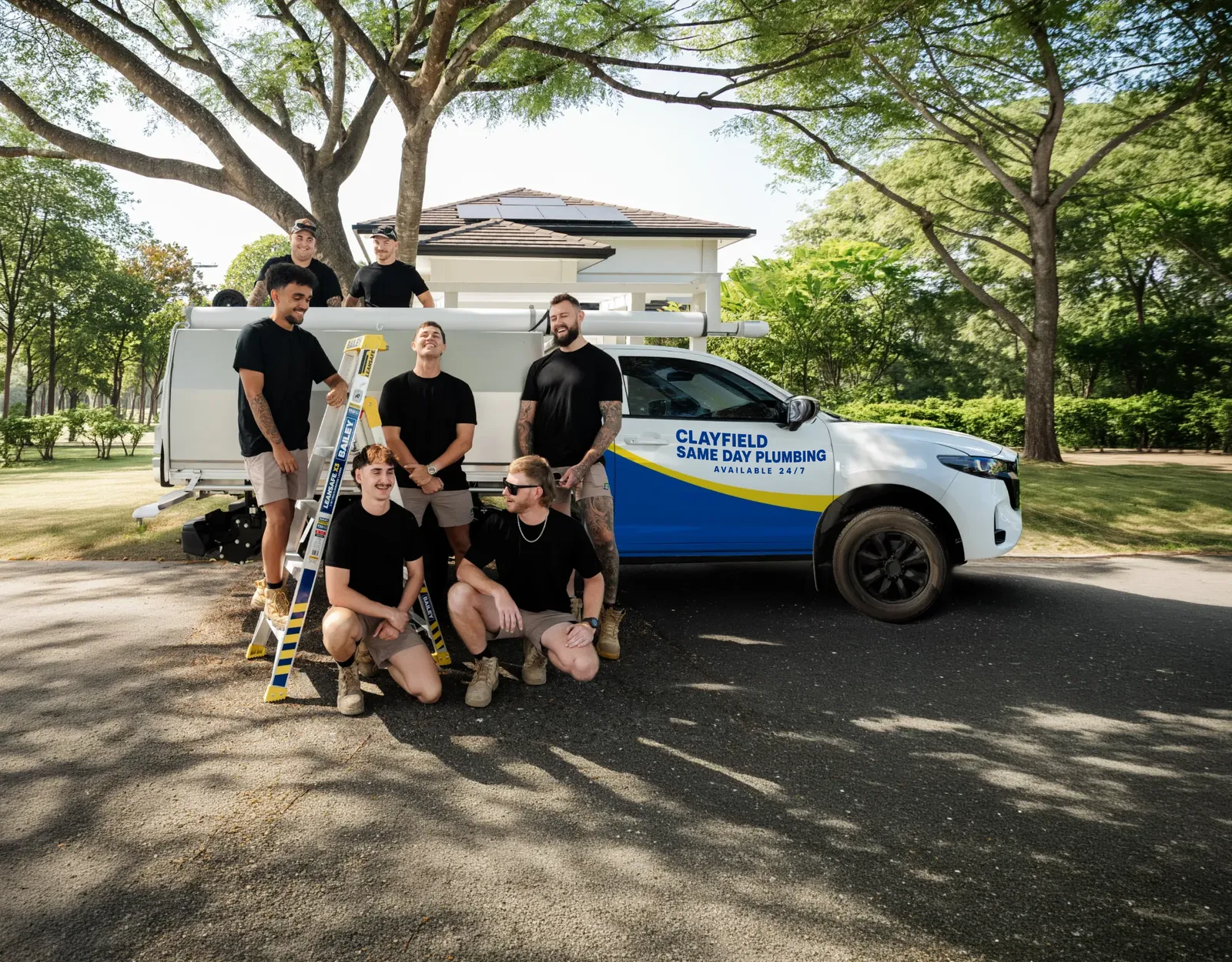
A leaking or slow-filling loo wastes water hour by hour and tends to get louder, not quieter. We find the fault, quote the figure in writing and finish the repair in one visit where parts allow.
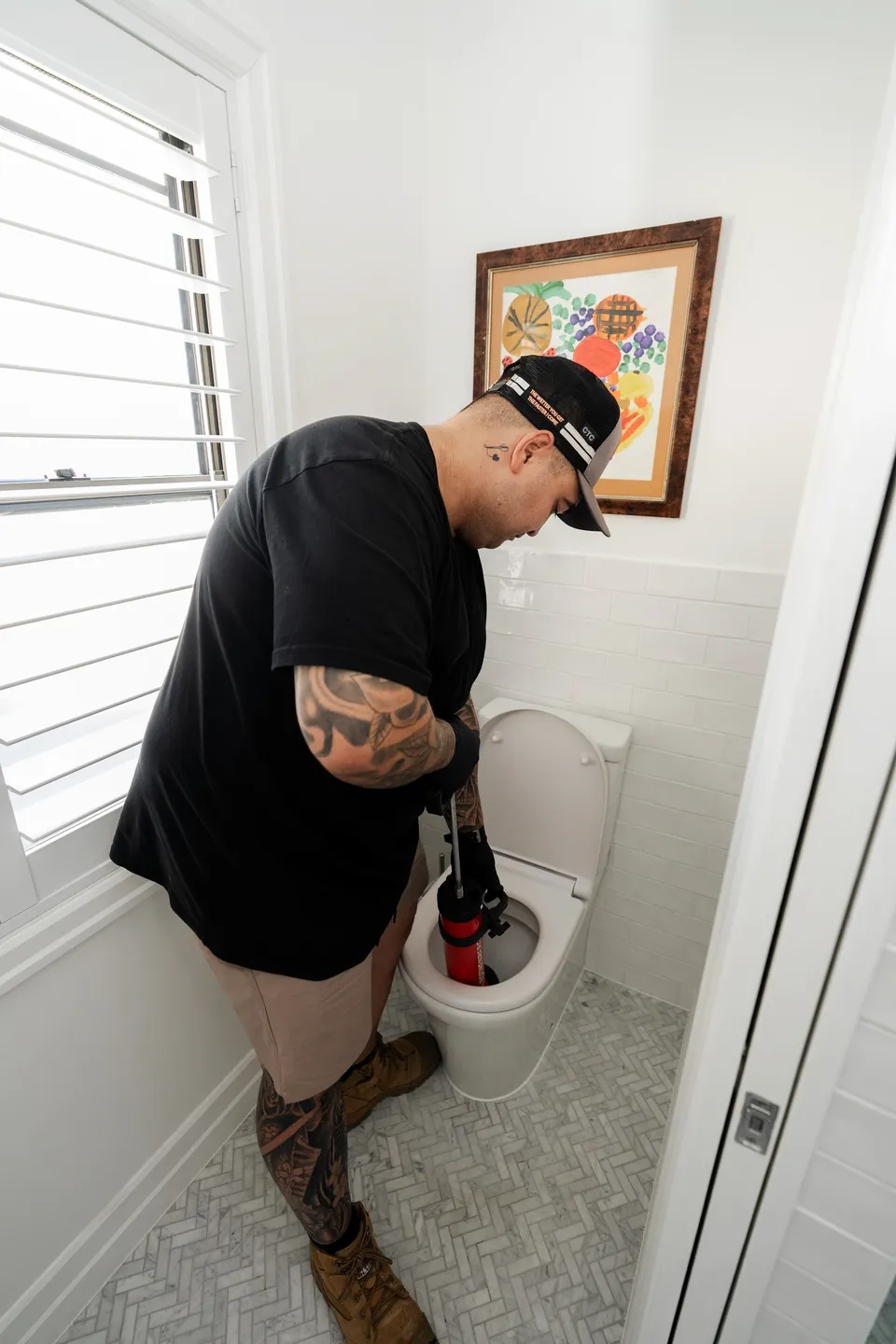
Running, Leaking and Slow-Filling Cisterns
The inlet valve, the outlet valve and the seals cause nearly every cistern fault, and each leaves its own signature. Here is how the three show up:
Inlet valve
fills the cistern after a flush and shuts off once the float reaches its level. Worn or blocked by sediment, it fills at a crawl or never stops at all.
Outlet valve
holds the stored water until you press the button. Once its washer wears, water slips into the pan and the cistern keeps topping itself up, so the loo sounds like it never rests.
Seals
keep the stored water off the floor and out of the pan. A perished one shows up as a damp patch or a silent trickle.
A weak or partial flush points the other way, to a float adjusted too low, so the cistern never holds enough water. A cistern that never fills at all is usually an inlet-side problem, and renewing the valve or resetting the float cures it.
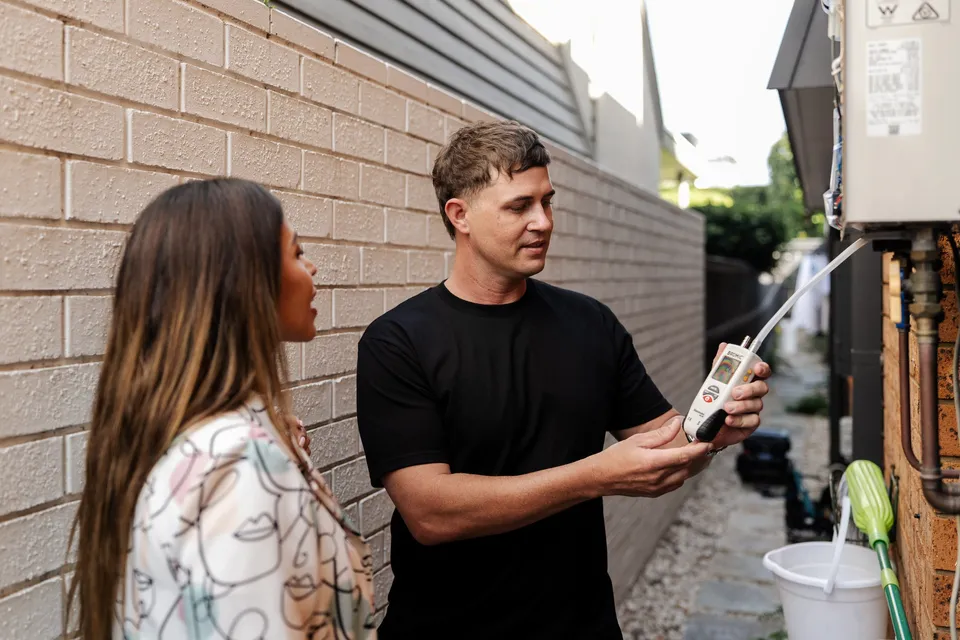
Leaks at the Base, Cistern and Supply Line
A toilet leak shows in one of three spots, and each spot names its part: the cistern, the base, or the supply connection. Dampness where the cistern sits on the pan points to the seal between the two. A puddle at floor level usually starts at the pan connector seal, the supply line, or a fine crack in the porcelain.
At the supply end, two fittings drip most: the mini stop, as the small tap under a cistern is known, and its braided feed hose. Either one sends water down the back of the cistern and onto the floor.
A sewer smell with no visible water means the rubber rings sealing the pan into the drain have perished or moved. One test settles a silent leak: a few drops of food colouring in the cistern, left unflushed, reveal the fault if colour reaches the bowl, and a later flush clears it without staining the ceramic.
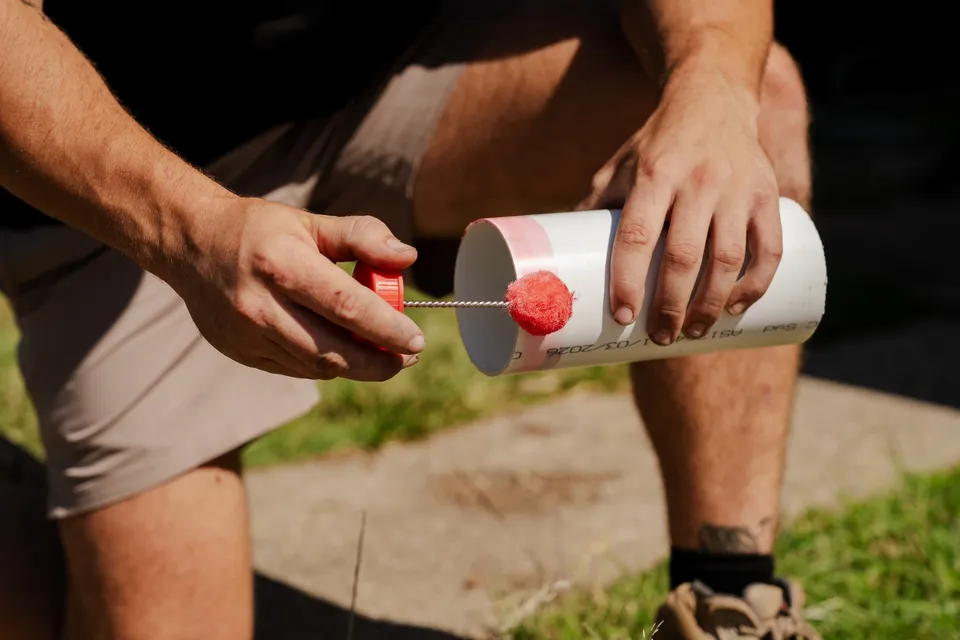
Cistern Washers and the Licence Line
Queensland draws the licence line inside the cistern. The QBCC's unregulated list covers a drop valve washer, a float valve washer and the suction cup rubber. Anyone with the know-how may renew any of those three, and the finished work still answers to the standards.
Everything else on a loo is minor work, which a licensed plumber does with no permit and no Form 4. Seals, pan connectors, buttons, valves and any replacement cistern all sit on the licensed side of that line.
A blocked or broken toilet also counts as an emergency repair under Queensland tenancy rules, so a renter cannot be left waiting on it. The rules require the owner or manager to keep the place in good repair, with the tenant reporting faults as soon as they notice.

What Affects the Cost of a Toilet Repair
The price of a toilet repair depends on which part failed, whether the porcelain has fractured, and how reachable the cistern and its supply tap are. The parts count matters too, since one washer costs less than three.
We quote the figure only after seeing the job, so you know the full amount before any work begins. Two things can tip a repair towards a replacement, and we say so plainly when we see them.
A fracture in the porcelain ends the repair conversation, because no washer seals a cracked pan. And a loo on its third call-out in a year often costs less to renew than to keep servicing. Replacement cisterns and pans need WaterMark certification before a licensed plumber may legally install them.

Older Fixtures on Our Patch
Plenty of cisterns near the Scots Presbyterian Memorial Church on Queens Road still run brass or early plastic fittings that have simply worn to their limit after decades of service. Renewing those parts brings the old suites back to a clean fill and a proper flush.
Upstairs in the walk-up blocks, a burst hose behind a loo can drip all day until somebody comes home, and the flat below wears the water damage. Knowing where your stop tap sits turns that story into a five-minute shut-off.
Dripping taps in the same bathroom usually share the same age, so we often fix both in one visit. Our tap repairs in Clayfield cover washers, seats and mixers, and a tap replacement suits fittings past their last repair. Both sit under our wider tap and toilet plumbing service, and a loo that will not stop running gets its own diagnosis guide.
How Every Toilet Repair Visit Runs
- 1

Tell us what's happening
Call (07) 3524 7163 or send the form with a few details about the problem in Clayfield. A clear description helps us bring the right parts.
- 2

We find the fault on the spot
We lift the cistern lid, check the fill level and the flush, run the dye test where a silent leak is likely, and inspect the pan connector, seals and supply fittings before any quote.
- 3
Approve a fixed price
You get a fixed quote before any work starts, with flat-rate pricing and no hidden fees. Nothing goes ahead until you say yes.
- 4

Pay when it's finished
Pay by card or EFTPOS on site once the job's done, or ask about Fix now, pay later.
Plumbing job in Clayfield?
$0 call-out fees, available 24/7, and same-day where we can.
Toilet Repair Questions From Clayfield
Call (07) 3524 7163Which parts usually fail inside a cistern toilet?
Three parts do most of the damage: the inlet valve that refills the cistern, the outlet valve holding the stored water, and the seals. Each fails its own way, with a slow or endless fill, a loo that runs, or a drip that shows on the floor.
Why is my toilet cistern not filling up?
Scale or grit inside the inlet valve is the first suspect, slowing the fill to a crawl or stopping it outright. A float riding too low, or a supply tap left part-open under the cistern, starves it the same way. We test the supply first, then work down the causes until the cistern fills and shuts off cleanly.
Why does my toilet smell of sewage?
Sewer gas getting past the pan-to-drain seals is the usual reason. The rubber rings dry out or shift with age, so a plumber checks them and the pan connector, then reseals or renews whichever one let the smell through.
Can I fix a leaking toilet myself in Clayfield?
Yes, for three rubbers only: the drop-valve washer, the suction cup rubber and the float-valve washer, which the QBCC treats as unregulated work that still must meet the standard. Every other toilet repair is licensed minor work.
Does Urban Utilities cover a leaking cistern on my bill?
No, the concealed leak adjustment leaves toilet cisterns out, so the owner wears that loss on the meter. Booking the repair early beats letting a running loo tick over for months.

Book Your Toilet RepairWe'll call you back.
Phone (07) 3524 7163 for a licensed plumber in Clayfield. We work under QBCC No: 15024607, with flat-rate pricing, no hidden fees and same-day where we can.
To claim your $0 call-out fee, call (07) 3524 7163 today.